How many of us classify pasta as our go-to meal when we have no drive, inspiration or energy? Me for one. There’s always dried pasta in the pantry and at least a bag of frozen sauce in the freezer (from the summer harvest). If I’m super lazy and I don’t want to even bother with defrosting, there is usually a jar of prepared spaghetti sauce in the cupboard.
Since “Pasta is Perfect” (to quote McFadden), let’s delve into his new cookbook.
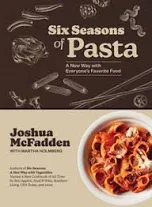
About the book:
Six Seasons of Pasta: A New Way with Everyone’s Favorite Food
by Joshua McFadden (with Martha Holmberg)
In Six Seasons of Pasta, noodles become the perfect showcase for each season’s bounty of produce.
There are more than 125 recipes organized by season, plus the Italian classics that everyone should have in their repertoire, from Cacio e Pepe to Pasta Fagiole (three ways!). Artichokes with Tomatoes and Mint celebrates the fresh, delicate flavors of spring; Fall’s warming notes are reflected in Mushrooms with Onion, Pancetta, and Cream; and a classic Winter dish like Baked Ziti with Broccoli Rabe is hearty and nourishing. But Six Seasons of Pasta does so much more than pair noodles with seasonal produce. The book teaches us how to intuitively cook a perfect pasta dish from scratch using McFadden’s tried and true “building-in-the-skillet” method. Cooking pasta is never as simple as it seems, so he walks the reader through every step, from boiling water to marrying the noodles with the sauce. McFadden’s time-tested technique will always result in a satisfying and delicious bowl of pasta.
—From the author’s website

About the author:
Joshua McFadden is a creative collaborator known for shaping thoughtful, ingredient-driven hospitality experiences. As the founding partner of Submarine Hospitality, he helped bring to life some of Portland’s most beloved restaurants—Ava Gene’s, Tusk, Cicoria, The Woodsman, and Los Burros Supremos—each rooted in a deep respect for seasonality, craft, and place.
Today, Joshua continues to guide new restaurant concepts across the country, offering a blend of culinary vision, operational insight, and design sensibility.
Beyond the kitchen, Joshua is restoring Berney Farm, a 50-acre property in Springdale, Oregon. There, he is cultivating an agricultural and creative refuge where farming, food, and design meet—offering a space for collaboration, education, and celebration.
He is the author of Six Seasons: A New Way with Vegetables, co-written with Martha Holmberg, winner of the 2018 James Beard Award. Their second book, Grains for Every Season, was nominated for the award in 2022. This is his third cookbook.
—From the author’s website
What I thought….
As I stated in the intro, pasta is most people’s go-to easy dish. McFadden acknowledges this but with a caveat:
Most people think cooking pasta is simple: Boil some noodles, make a sauce, sprinkle on some cheese. But cooking pasta is simple in the way writing haiku is simple…. My goal in this book is to identify all the steps involved in making a poetic plate of pasta… (7)
I was expecting a lot of easy pasta dishes. While there’s nothing overly complicated here, McFadden turns dried pasta into an event. This is not boil and serve. He’s kind of a perfectionist when it comes to cooking pasta. You must master when to salt your pasta water, how much salt to add, what kind of salt, when to add the noodles, etc. It’s a whole thing. Then, what sauce is best, what is the sauce to noodle ratio, doneness, garnishing, warming the bowls…
There’s a long section on “Your Pasta Pantry” with some really delicious flavored butter recipes, pestos, and crunchy toppings. The pantry should also contain cheeses (like Parmigiano-Reggiano, Pecorino Romano, mozzarella, and ricotta), EVOO, the aforementioned butters, herbs and spices and tomato products (paste and whole peeled tomatoes). As with any good pasta proponent, he includes recipes for a Caesar salad and garlic bread for the full meal.
Then, we get to the equipment from digital scales to a good timer.
It’s page 56 before we get to any true pasta recipes.
McFadden includes complete pasta recipes but he starts with just the ragus (fourteen of them). Most of these recipes make enough to freeze for later use.
“Any Season” is the first section with complete recipes. These recipes are the go-tos, the ones you can make with just what’s in the pantry: Aglio e Olioe, Caacio e Pepe, Carbonara, and even chicken noodle soup.
“Spring” focuses (obviously) on what is in season. These recipes focus on artichokes, peas, asparagus, leeks, nettles, ramps and turnips. “Early Summer” includes a lot of beets, carrots, celery, fennel, arugula, snap peas and spring onions. “Midsummer” uses ingredients like broccoli, cauliflower, green beans, and summer squash. “Late Summer” has sweet peppers, chile peppers, jalapenos, eggplant, fresh tomatoes, and basil. “Fall” was a bit of a throwback to “Any Season” but does include three recipes for Pasta Fagiole and focuses on chard, Brussels sprouts, Kale and mushrooms. “Winter” recipes rely on broccoli rabe, cabbage, celery root, butternut and winter squash.
In the “Late Summer” section, McFadden lists ideas and instructions to invent your own pasta salad.
One convenient thing is that McFadden extols the use of dried pasta only. Other tidbits and surprises follow:
- He uses rigatoni for his carbonara.
- He places his pomodoro recipe in the “Anytime” section using canned tomatoes and mint. (I always associated pomodoro with fresh tomatoes.)
- There’s some great salad dressing recipes sprinkled throughout the book: a great Italian Salad Dressing with fennel seeds and dried herbs (162) for Pasta Salad with Roasted Artichokes and Salmon (161); and a Pancetta Vinaigrette for the Springtime Pasta Salad (168-169).
Six Seasons of Pasta includes a lot of vegetarian options but sausage figures into a lot of recipes as does seafood like shrimp, squid, mussels, tuna, and salmon.
One blooper I found—the photo for Cauliflower with Olives and Tomatoes (249) definitely had broccoli or broccolini in it instead of cauliflower.
I studied less the whole pasta boiling treatises at the beginning of the book and was more taken with the actual recipes.
Note that a lot of his recipes feed 2-3 people. They are easily doubled if needed because who doesn’t like leftover pasta.
What I Made…
There were more than a few candidates for dinner:
- Amatriciana (103)
- Sausage and Tomatoes (123)
- Pasta Fagiole Number Three: The New Classic (324)
A lot of the pasta salads almost made this list but The Hubs had just made some delicious sourdough garlic bread so I needed something saucy and hearty.
Sausage and Tomatoes is a simple recipe: Italian sausage, garlic, chili flakes, canned tomatoes, orecchiette, butter and Parmigiano. McSpadden suggests that pickled chiles (and a splash of their pickling liquid) can be used in the dish as well. It was simple, easy, and delicious. It’s also pretty economical, too. Especially if you buy $.99 rigatoni. (I splurged for the orecchiette.)
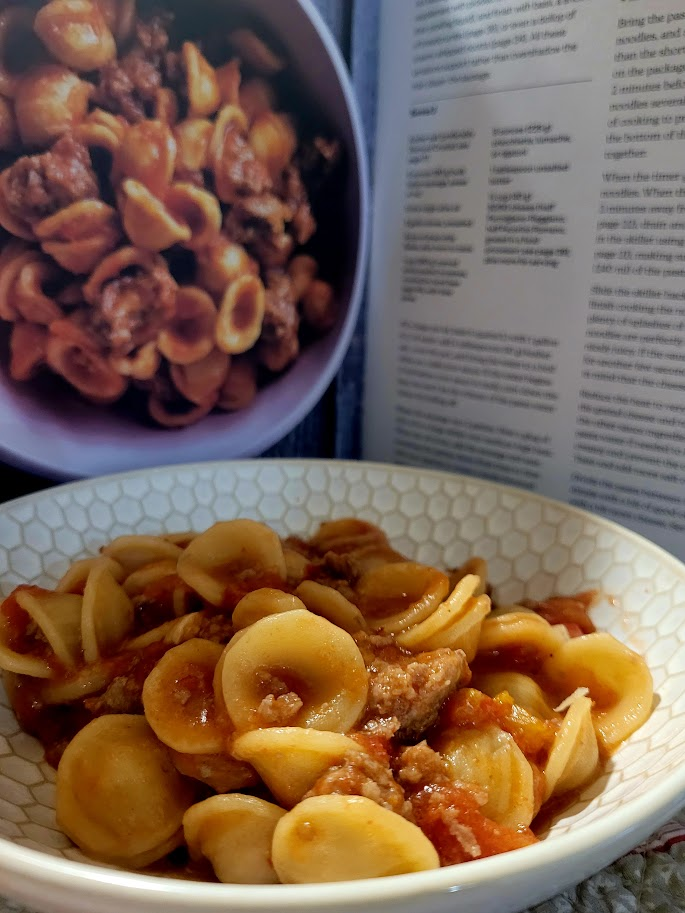
An interesting technique here: McFadden has you form the sausage into patties and then fry them like you would breakfast sausage. When the tomatoes are added, you break everything up—the sausage and the whole tomatoes.
I also made the Italian Vinaigrette mentioned above. I’m sharing it because I tweaked it a bit.
Italian Salad Dressing
Based on Joshua McSpadden’s Italian Salad Dressing from Six Seasons of Pasta
I toasted the fennel seeds and added some parsley and thyme (instead of dried basil which I did not have.) I also threw in some red pepper flake.
Ingredients
- 1 T. fennel seeds
- 1/4 c. red wine vinegar
- 1/4 c. white balsamic
- 1 1/2 t. dried mustard
- 1/2 t. dried parsley
- 1/2 t. dried oregano
- 1/4 t. dried thyme leaves
- 1/2 t. Kosher salt
- 1/4 t. fresh ground black pepper
- 1/8 t. red pepper flakes
- 3/4 c. extra-virgin olive oil
- 1/2 c. grapeseed oil (or other mild oil)
Instructions
- Toast the fennel seeds in a small skillet over medium-high heat for about one minute or until aromatic. (Keep stirring the seeds and be careful not to scorch them.) (If you’re not using a high powered blender, then grind the seeds a bit. I threw everything in my Vitamix.)
- Combine the vinegars, fennel, mustard powder, parsley, oregano, thyme leaves, salt, pepper and pepper flakes in a blender and “whiz to blend.”
- With the blender running, drizzle in the oils. Taste and adjust seasoning as needed. Store in a sealed container in the refrigerator for up to 1 month.
I had to add some water to the dressing and it’s still quite thick. I think it is a keeper though. Personally, I would dial down the fennel a bit next time.
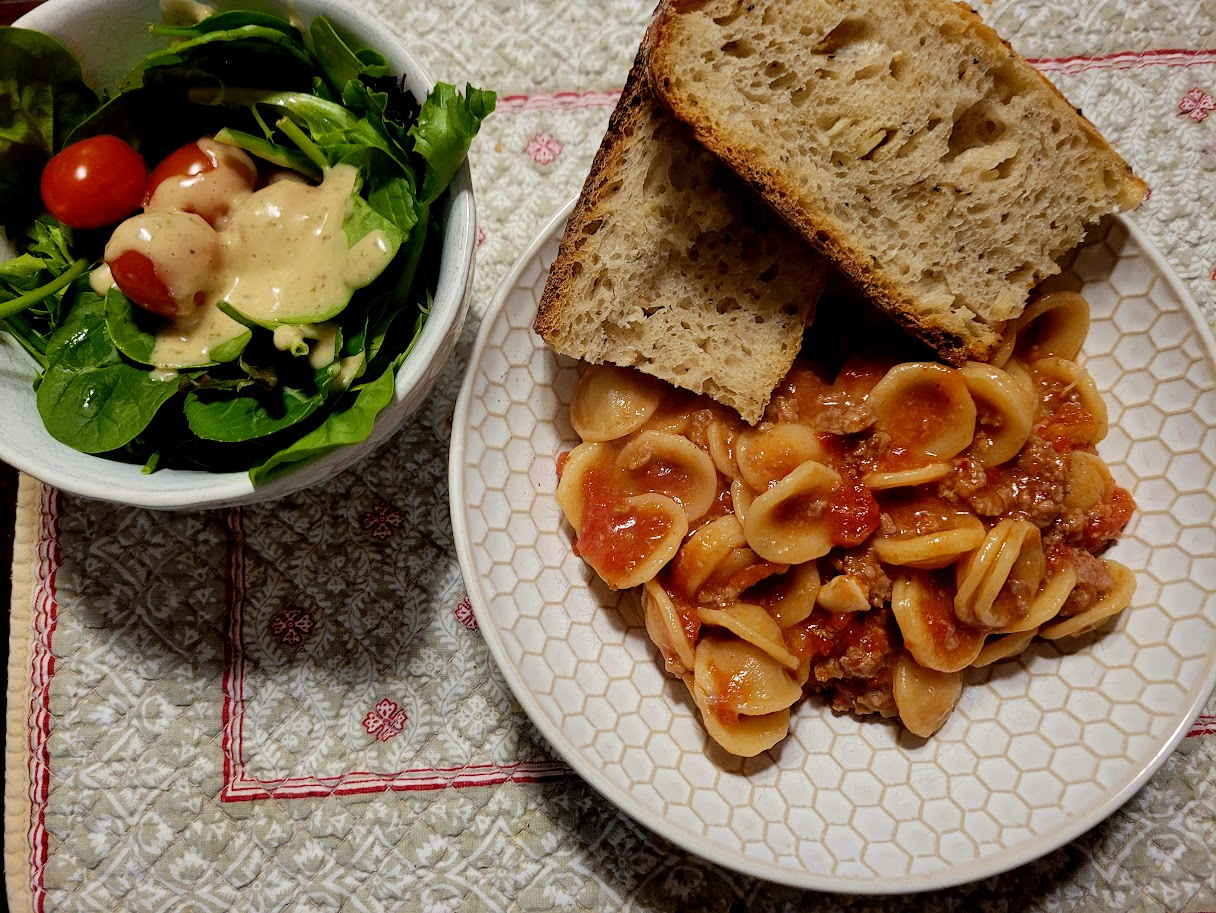
All in all, this was a great meal with the pasta, the green salad with this dressing, and The Hubs’ bread
.
Six Seasons of Pasta is another one of those books that I’m glad I check out of the library. 🙂
I’m linking up with Foodies Read.



Leave a Reply